

 Bahasa Inggeris





Teknologi Pemprosesan Mikro Laser Precision Pengilang
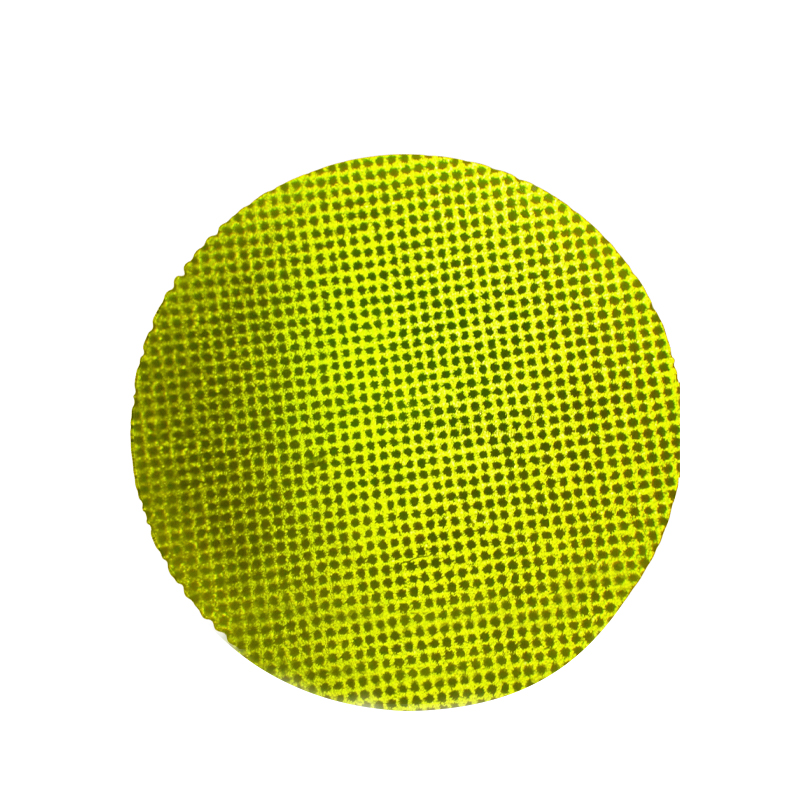
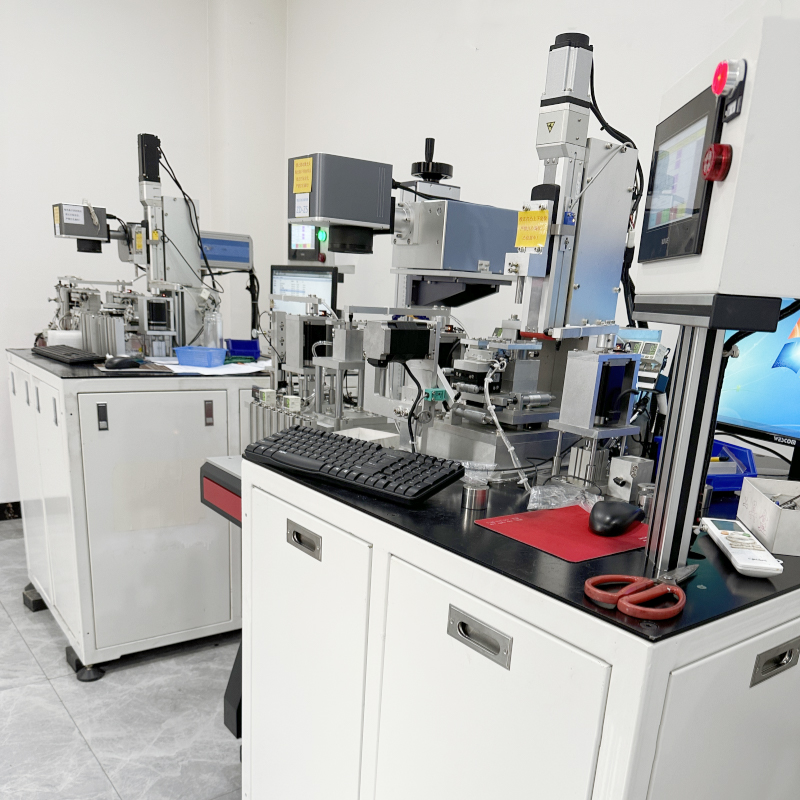
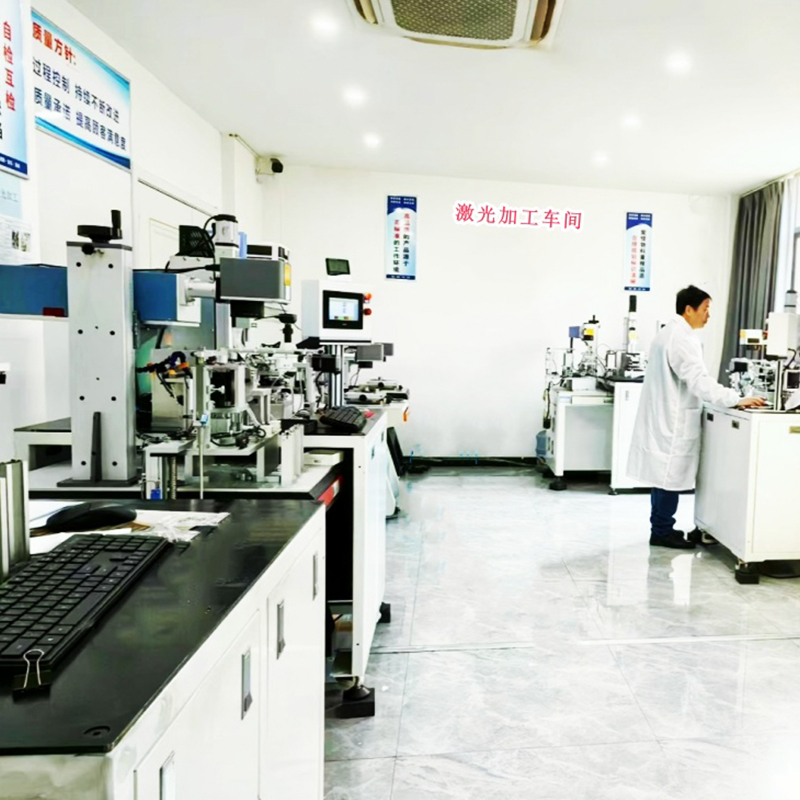
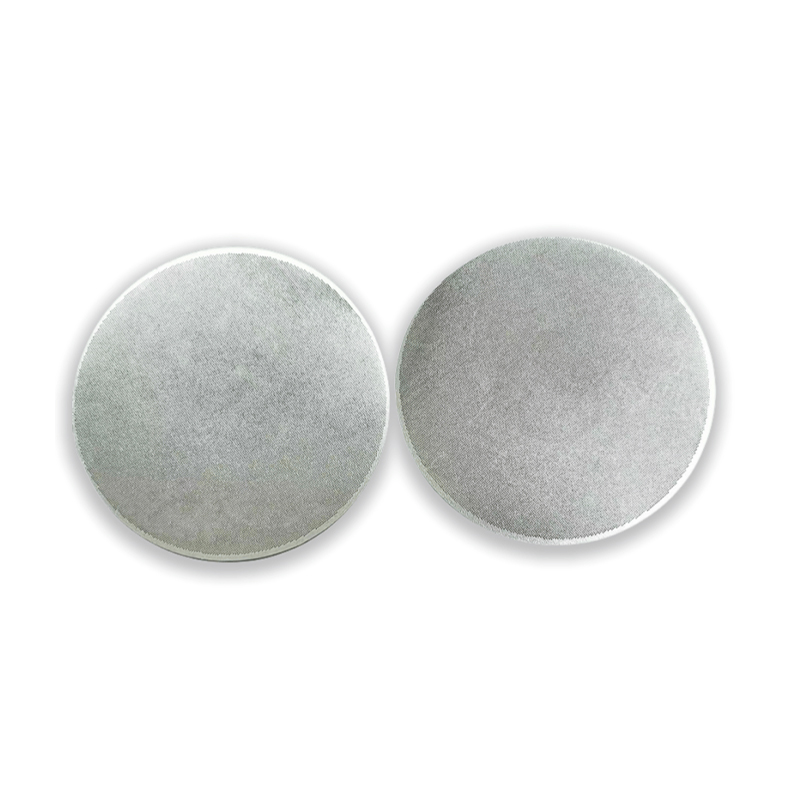
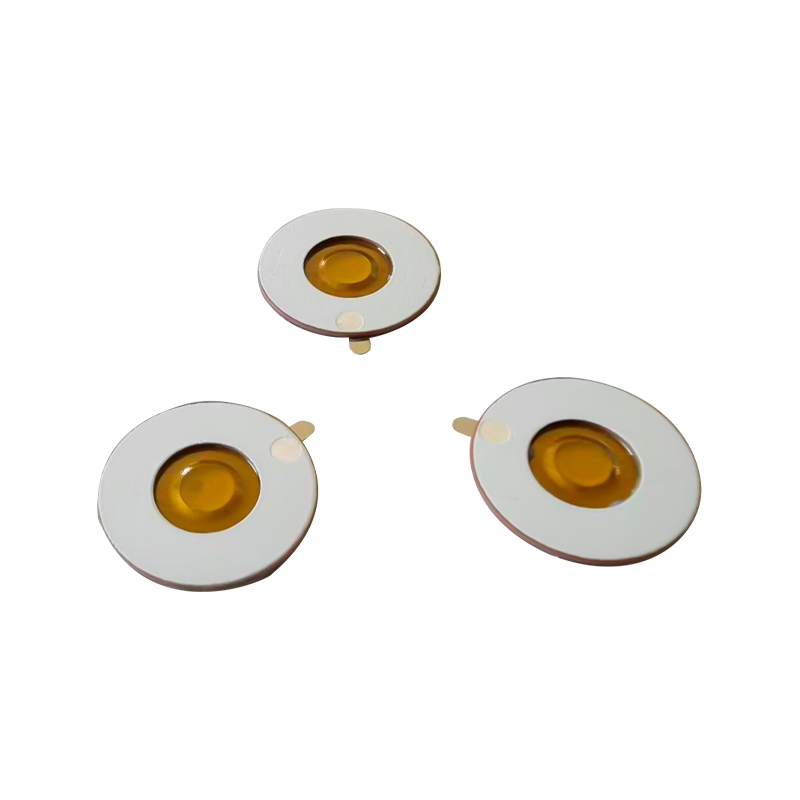
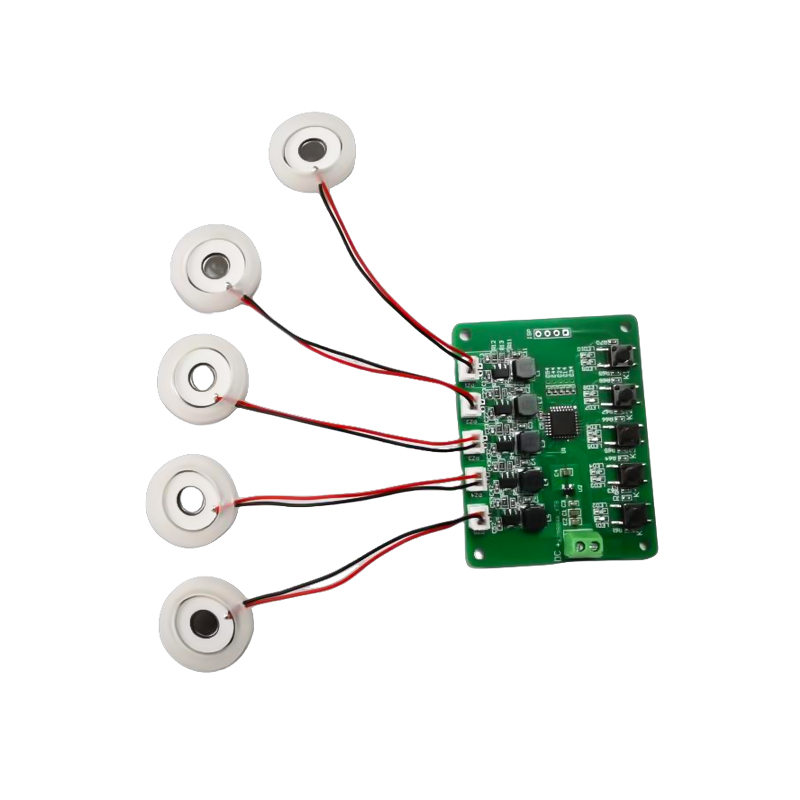
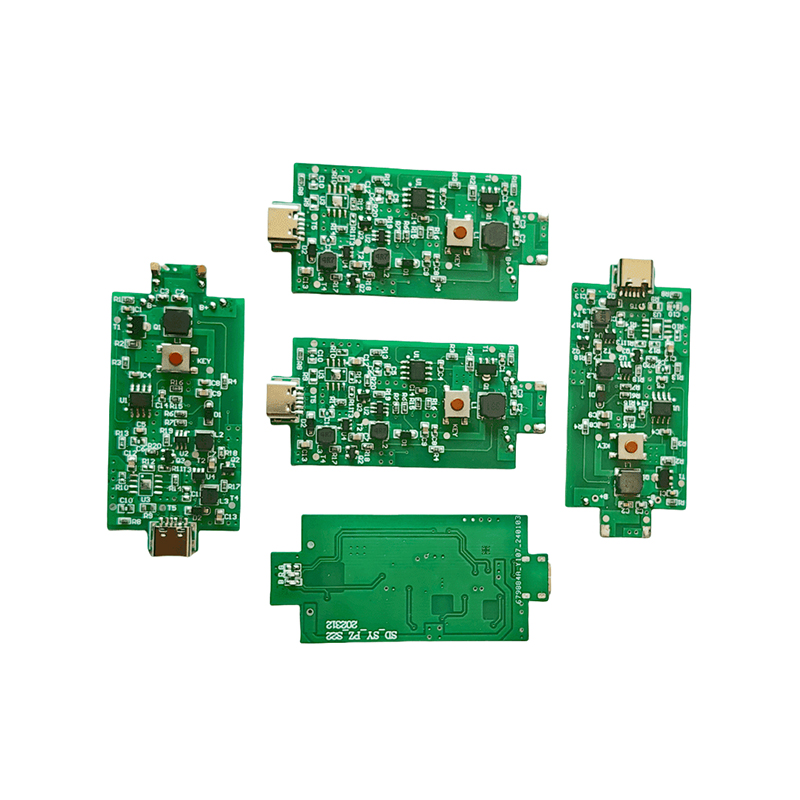
Pemprosesan microporous laser boleh disesuaikan untuk pelanggan dengan keperluan yang berbeza dari ketepatan microporous, mikroporus terkecil φ2μm mikro mikroporus φ30UM mempunyai ketepatan pemprosesan yang sangat tinggi, yang digunakan untuk bahan keluli tahan karat, dan bahan aloi titanium. Kami dapat merealisasikan bentuk microporous dan susun atur array yang kompleks untuk memenuhi keperluan ketat pemprosesan microporous untuk penapis elektronik mewah, penapis pembersih air, peranti perubatan, instrumen ketepatan, dan industri lain.
Saida Piezoelectric adalah perusahaan berasaskan teknologi yang terkenal di peringkat global yang mengkhusus dalam pengeluaran dan pembuatan produk berkaitan pengabutan perubatan, kami adalah China Teknologi Pemprosesan Mikro Laser Precision Pengilang dan Tersuai OEM/ODM Teknologi Pemprosesan Mikro Laser Precision Syarikat, Kami telah komited terhadap inovasi, penyelidikan dan pembangunan, serta promosi piezoelektrik seramik ultrasonik, produk pengabutan bebas plumbum, komponen elektronik, dan penyelesaian reka bentuk PCBA yang berkaitan. Matlamat kami adalah untuk meningkatkan kualiti hidup manusia melalui teknologi, dan mencapai masa depan yang lebih cekap, hijau, dan mampan untuk masyarakat.
Sejak penubuhannya pada April 2011, syarikat ini telah berada di barisan hadapan pembangunan teknologi, dengan pasukan penyelidikan dan pembangunan yang cemerlang, peralatan pengeluaran dan pembuatan yang canggih, serta peralatan ujian ketepatan. Kami merangkumi pelbagai produk pengabutan ultrasonik dalam bidang profesional kami, termasuk tablet pengabutan sedut perubatan berasaskan plumbum dan bebas plumbum, tablet pengabutan pelembap, tablet pengabutan minyak pati, tablet pengabutan industri, serta produk penderiaan yang berkaitan dengan piezoelektrik ultrasonik dan penyelesaian pemacu PCBA. Kami bukan sahaja memberi tumpuan kepada penyelidikan dan pembangunan teknologi yang mendalam, tetapi juga secara aktif mengaplikasikan pencapaian teknologi ke dalam kehidupan praktikal, supaya produk teknologi benar-benar dapat berkhidmat dan memberi manfaat kepada masyarakat, menjadikan dunia lebih menarik dan indah.
Pensijilan

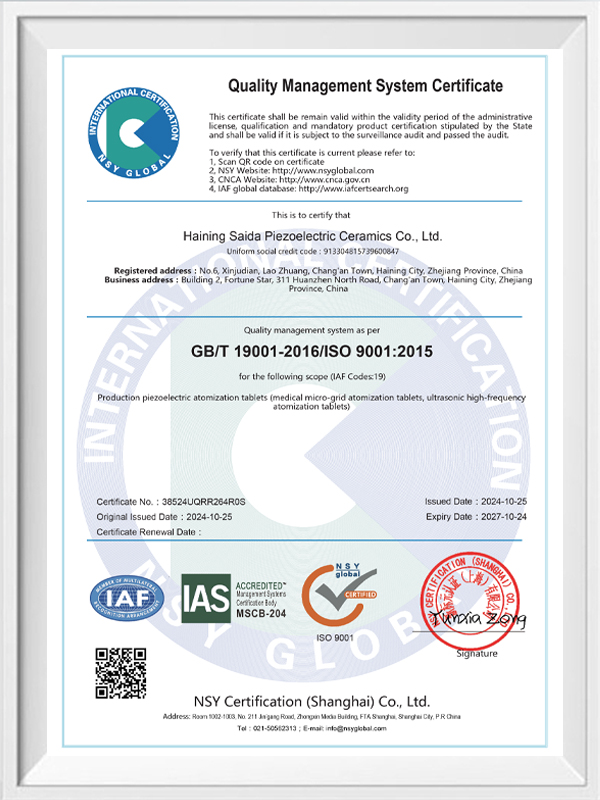
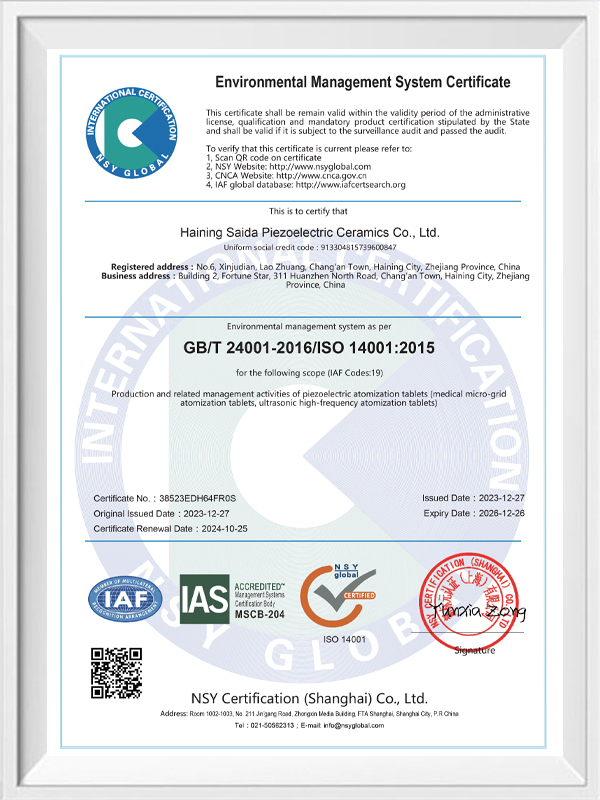
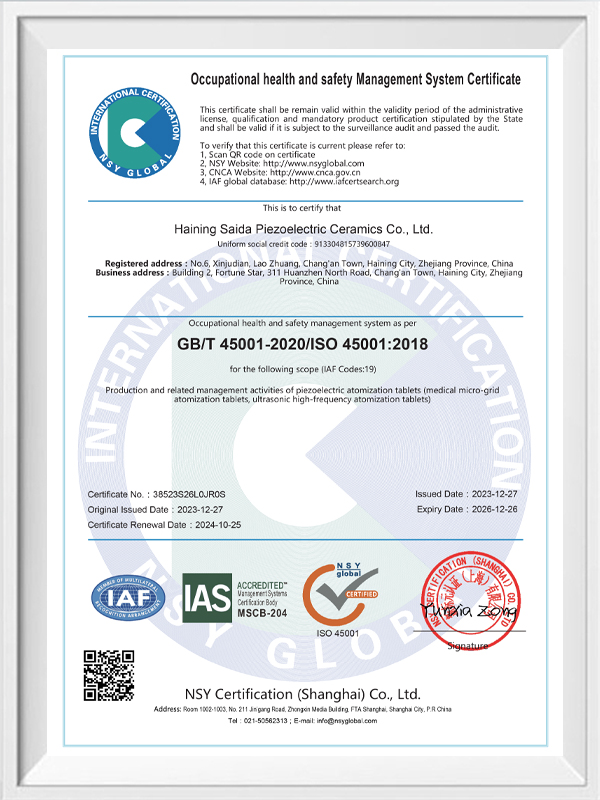
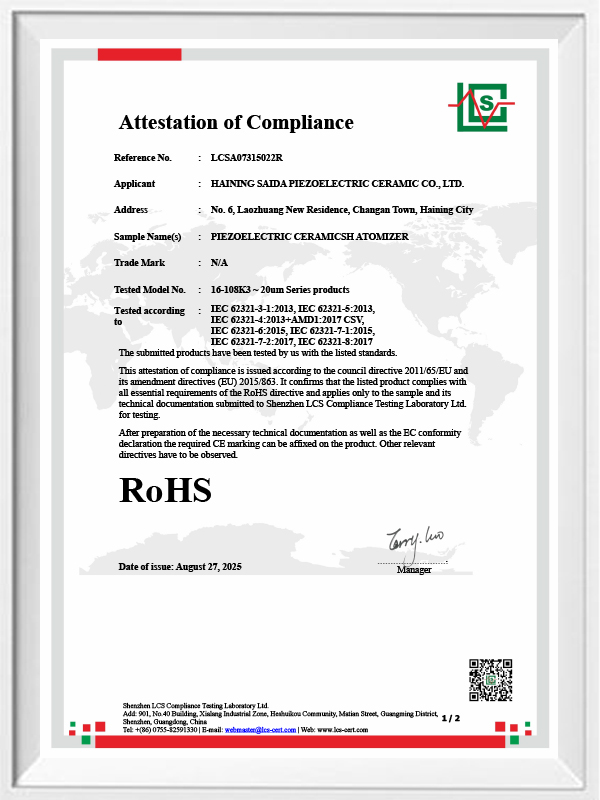
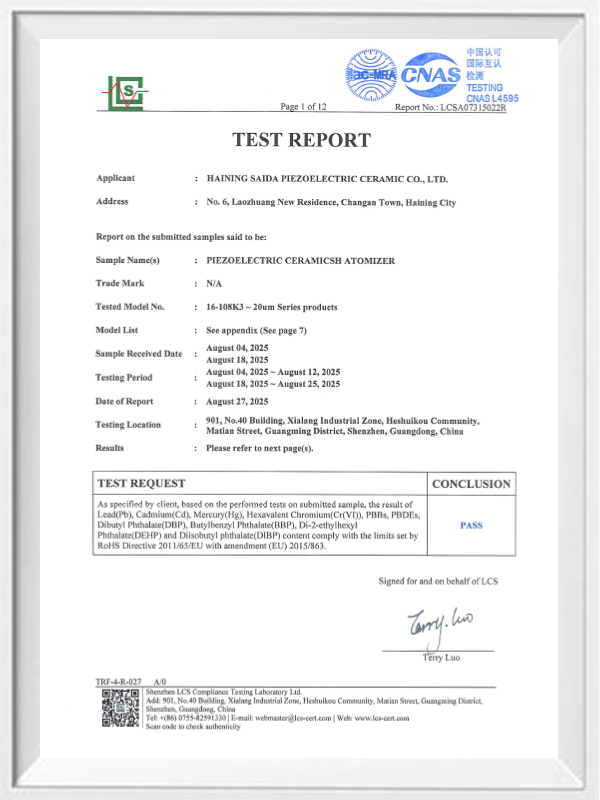
Produk siri pengabutan piezoelektrik sedut perubatan syarikat kami semuanya telah lulus pensijilan yang diperlukan untuk piawaian eksport. Ia termasuk pensijilan ROHS, pensijilan sistem kualiti ISO9001, pensijilan sistem kesihatan GB/T45001-2020/ISO 45001:2018, GB/T28001-2001 idt OHSAS18001:1999 Pensijilan Keselamatan dan Kesihatan Pekerjaan, pensijilan sistem alam sekitar GB/T24001-2016/ISO 14001:2015, California Proposition 65, REACH, dan produk pengabutan perubatan juga telah disahkan oleh FDA AS.

berita
-
Berita Industri
Mengapa Reka Bentuk PCB Gred Perubatan Mentakrifkan Presta...
Mengapa Reka Bentuk PCB Mentakrifkan Prestasi Pengabutan dalam Peranti Perubatan Dalam pengabut piezo, jaringan atau cakera yang bergetar mendapat perhatian. PCB sering dianggap sebagai komponen sokongan. And...
-
Berita Industri
Apa yang Menjadikan Precision Laser Microvias Menentukan P...
Di mana Ketepatan Lubang Mikro Menentukan Kualiti Kabus Pengabut piezoelektrik menukar tenaga elektrik menjadi semburan halus dengan menggetarkan jaringan logam nipis pada frekuensi tinggi. Watak kabus bergan...
-
Berita Industri
Cara Memilih Cip Nebulizer Mesh yang Tepat untuk Peranti P...
The cip nebulizer jaringan jauh lebih daripada aksesori ringkas. Ia adalah teras kejuruteraan yang menentukan kecekapan aerosol, ketekalan penghantaran ubat, jangka hayat peranti dan pematuhan peraturan ...
Teknologi Pemprosesan Mikro Laser Precision Pelanjutan Pengetahuan Industri
How do parameters such as laser power, pulse frequency, and scanning speed affect the quality of Precision Precision Laser Micro-hole Processing Technology Technology?
Influence of laser power
Laser power is one of the core parameters that determine the processing effect. It directly determines the energy density of the laser beam when it acts on the material. Too high power may cause excessive melting or even vaporization of the material, resulting in irregular hole walls or expansion of the heat-affected zone (HAZ); while too low power may not effectively penetrate the material, resulting in processing failure. Accurate control of laser power is the key to achieving high-quality micro-hole processing.
In our Precision Precision Laser Micro-hole Processing Technology Technology, we use advanced laser equipment and precision control systems to ensure high-precision micro-hole processing on materials such as stainless steel and titanium alloys. For example, our Precision Precision Laser Micro-hole Processing Technology Technology technology can achieve micro-holes with a minimum of φ2μm and a maximum of φ30μm, meeting the strict requirements of medical devices and precision instruments for micro-hole size. This high-precision processing capability has been widely used in products such as medical atomizers and water purifier filters.
The selection of laser power also needs to consider the characteristics of the material. For example, for high reflectivity materials (such as copper and aluminum), we adjust the laser power and wavelength to reduce reflection loss and ensure processing efficiency and quality. For heat-sensitive materials, we reduce the heat-affected zone and avoid material deformation or damage by reducing power and optimizing processing parameters.
The role of pulse frequency
The pulse frequency determines the number of times the laser energy acts on the material per unit time. High pulse frequency can improve processing efficiency, but may cause heat accumulation and affect the quality of the hole wall; low pulse frequency helps to reduce the heat-affected zone, but will reduce the processing speed. The choice of pulse frequency requires finding a balance between efficiency and quality.
In our processing, we rely on advanced automatic laser drilling machines and precision testing equipment to flexibly adjust the pulse frequency according to customer needs. For example, in the manufacture of medical atomizers, we ensure the consistency of micropore shape and array layout by accurately controlling the pulse frequency, thereby improving the performance and reliability of the product. For micropore processing of complex shapes, we achieve high-precision processing effects by adjusting the pulse frequency and laser energy distribution.
The pulse frequency is closely related to the thickness and hardness of the material. For thicker or harder materials, we usually use higher pulse frequencies to improve processing efficiency; for thinner or softer materials, we use lower pulse frequencies to reduce the heat-affected zone.
Optimization of scanning speed
The scanning speed directly affects the residence time of the laser beam on the material surface. Too fast speed may lead to insufficient processing and incomplete micropores; too slow speed may cause overheating of the material, resulting in rough or deformed hole walls. Optimization of scanning speed is an important part of achieving high-quality micropore processing.
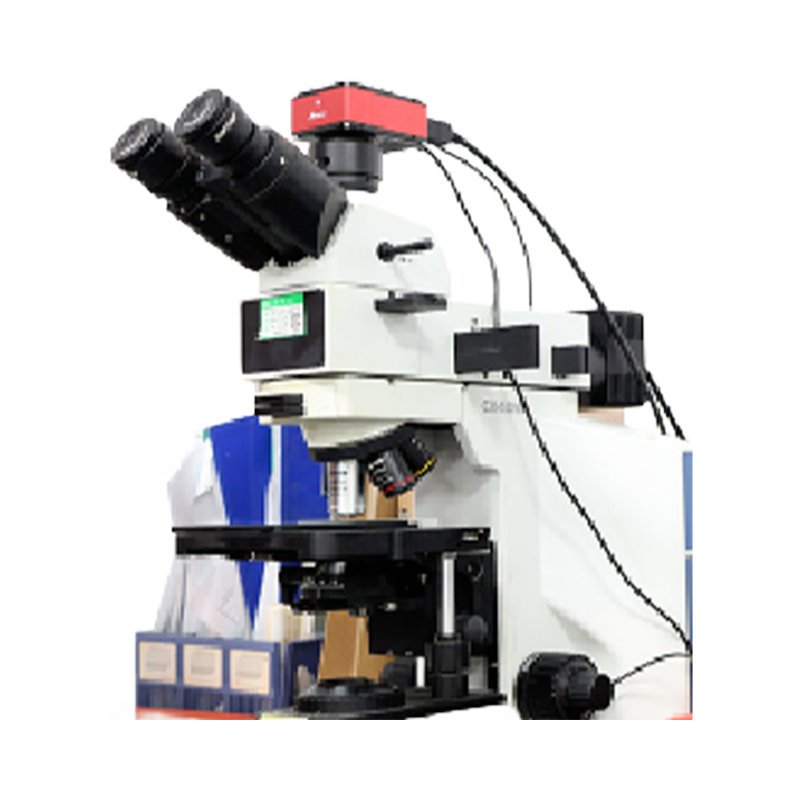
In our process flow, we optimize the scanning speed and combine testing equipment such as particle analyzers and metallographic microscopes to ensure that each process meets the highest standards. For example, in the micropore processing of water purifier filter elements, we achieve high-precision processing of complex micropore shapes by accurately controlling the scanning speed to meet customers' requirements for material physical and chemical properties and high-precision geometric dimensions.
The selection of scanning speed also needs to consider the synergistic effect of laser power and pulse frequency. Through experiments and data analysis, we have established a complete set of parameter optimization models that can quickly determine the optimal scanning speed according to different materials and processing requirements.
Application of Precision Laser Micropore Processing
Precision laser micropore processing technology is widely used in many fields. In the field of medical devices, we use high-precision micropore processing technology to manufacture excellent medical atomizer sheets for atomization treatment of inhalable drugs. In the field of electronic components, we provide high-precision micropore processing services for high-end electronic filter elements and precision instruments to ensure product performance and reliability.
In the field of environmental protection, our laser micropore processing technology is widely used in the manufacture of water purifier filter elements. By precisely controlling the size and distribution of micropores, we can significantly improve the filtration efficiency and life of the filter element. Our technology is also used in the aerospace field to provide high-quality micropore processing services for precision sensors and engine components.
Jadi Orang Pertama yang Tahu
Untuk tawaran eksklusif dan tawaran terkini, daftar dengan memasukkan alamat e-mel anda di bawah.
- Pautan Pantas
- Produk
- Mengenai
- Permohonan
- Berita
- Hubungi
- Pautan Produk
- Atomizer piezo mesh perubatan
- Polimer pi filem piezo atomizer
- KNN Piezo Meezo Free Lead
- Pi memimpin cip sifar mesh percuma
- Pengabaian piezo mikro untuk pemanas
- Piezo Atomizer untuk Fan/Humidification/Beauty
- Transduser atomisasi ultrasonik
- Pengabaian Piezo Kekerapan Ultrasonik Tinggi
- Generasi Kuasa/Pemanasan Sensor Piezo Atomizer
- Reka Bentuk PCB Piezo Piezo Perubatan
- Teknologi Pemprosesan Mikro Laser Precision
- Hubungi
-
Bangunan 1, Fortune Star 2, No.311 Huanzhen North Road, bandar Chang'an, Haining City, Wilayah Zhejiang, China.

-
+86-18006619680

-
+86-13777879680

-
Felix@saidapiezo.com

riney@saidapiezo.com
yugao@saidapiezo.com
emily@saidapiezo.com
dean@saidapiezo.com -
Felix: +86 18157327658

John: +86 18957351358
Emily: +86 18957339358
Dean: +86 15356418868
- Mudah Alih